Events as a marketing channel: underrated but powerful

A corporate event is one of the most powerful marketing channels you have. And the most underused. Companies pour months into the organisation, hundreds of people into the room. And then leave it at that. No photos that live on, no content that still works after the day, no clear link to a marketing objective. In short: event marketing left untapped.

That's a shame. Because event marketing isn't the same as organising an event. It's about the question: what do you want this event to do for your brand, your leads or your client relationships? And: how do you make sure the event keeps paying off for weeks after the day itself?

Live Impact is an events agency from 's-Hertogenbosch that has been organising corporate events for over 25 years: from product launches for 50 clients to internal kick-offs for 2,000 employees. We see the difference every day: an event set up as a marketing moment consistently delivers more than an event treated purely as a logistics project.

Event marketing comes down to three things: having your objective clear before you start, actively harvesting content during the event, and making the most of that material afterwards. In this article we explain it step by step.

Objective first, programme second

Many events are built around the programme. Who's speaking? What entertainment do we book? Those are the wrong opening questions. The right opening question is: what do I want this event to do for my brand or organisation?

There are four main objectives in event marketing. The first is brand awareness and positioning: you want attendees to associate you with a particular theme, a particular quality or a particular voice. The second is new-client acquisition: you put potential clients in an environment where they see your brand in action and have a conversation that would never arise spontaneously in another channel. The third is client retention and loyalty: you deepen existing relationships by creating a shared experience that goes beyond business contact. The fourth is internal motivation and culture: for employee events this is often the heart of it.

Choose one primary objective per event. Not two, not three. An event that wants everything at once does nothing well. Write the objective down as a single sentence: 'After this event, 30 of our 50 potential clients in the room are warm enough for a follow-up meeting.' A sentence like that steers every decision after it: the programme, the venue, the guest list and the content you harvest.

Translate your objective into measurable indicators too. For new-client acquisition: the number of conversations booked after the event. For brand awareness: the reach of your recap film and social media posts. For loyalty: NPS score and client retention. Without a benchmark, you won't know afterwards whether it worked.

Pre-event marketing: charging up your event

The event doesn't begin on the day itself. For anyone who takes event marketing seriously, the marketing machine starts six to eight weeks before the event. That's the moment you build anticipation, create visibility and make sure people already associate the event with a feeling before they walk through the door.

The announcement is the first marketing moment. Not 'come to our event', but an announcement that tells attendees what they can expect and why it's relevant to them. Think of a teaser with a quote from the speaker, or a behind-the-scenes photo of the venue preparation. Plus a short video from the organisation with a personal message. Each of those touchpoints builds anticipation and brand association.

LinkedIn is the most important pre-event channel for B2B events. Post at least four times in the run-up: the announcement, a speaker intro, a programme preview and a countdown. Each post with a clear call to action (register, respond, tag). Involve registered guests. Ask them to share it, give them the hashtag, send them a teaser they can easily re-post.

Build an event page, even if the event is invitation-only. That page does three things: it gives registrants a place to return to, it's easy to share, and after the event it serves as the basis for the recap. Make sure the page breathes the brand feel. No generic registration form. More on the full communication strategy around an event →

On the day: harvesting content and building brand experience

On the day of the event, two processes run in parallel. The first is the experience for the attendees: the programme, the atmosphere, the connection. The second is the content stream for everyone who isn't there. Good event marketing manages both deliberately.

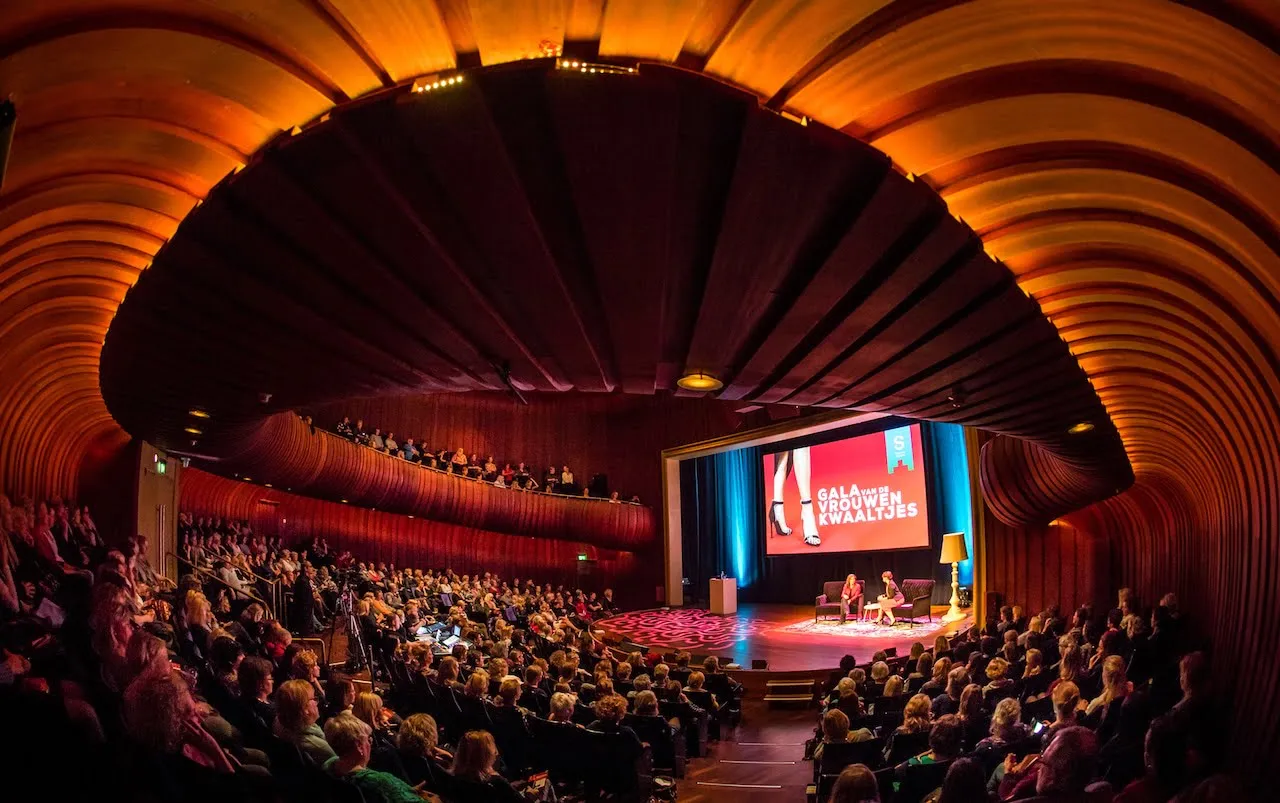
Book a photographer and videographer with a proper brief. Not just 'take nice photos'. Give them the shots you need: the room full, the speaker on stage, guests in conversation, the logo or the brand presentation in the background, close-ups of reactions. Without a brief you'll get nice photos that do nothing for your marketing objective. With a brief, you'll have usable material straight after the day for eight weeks of content planning.

Appoint someone to post two or three social media updates during the day: a quote from the speaker and a short clip of a highlight. Or a photo that shows the atmosphere in the room. That live material often has more reach than the recap film a week later, because the urgency is in it.

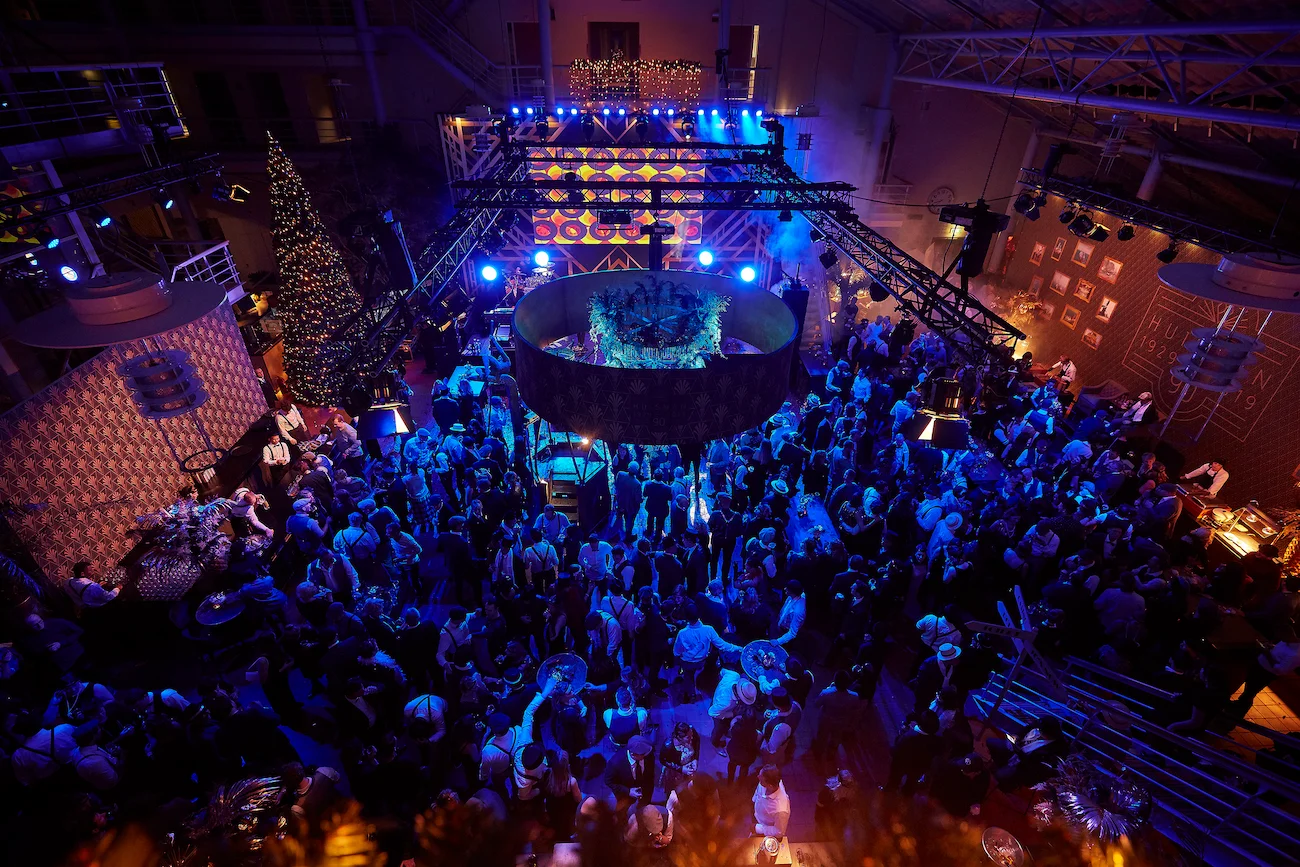
Make sure your brand presence is everywhere, but not pushy. Think of the stage and the backdrop, but also the name badges and the catering presentation. Those elements carry every photo and video guests post themselves. A guest who takes a selfie in front of your backdrop is doing marketing for you without you having to ask. That's where brand experience and event marketing reinforce each other.

Post-event marketing: the longest tail of your investment

From a marketing point of view, the day after the event is the busiest moment. That feels paradoxical, because the event is over and the team is tired. But for your marketing objective, the work is only just starting.

Send a thank-you message to all attendees within 24 hours. Not a generic 'thanks for coming', but something that refers back to a specific moment from the day and includes a link to the first photos or a summary from the speaker. That message typically has an open rate above 70 per cent. A unique reach no other marketing channel achieves.

Publish the recap film within seven days. After two weeks the emotion is gone. After a month no one cares any more. Use the recap film as the basis for your LinkedIn post, send it to people who couldn't make it, and embed it on your event page. A good three-minute recap film generates, on average, 3,000 to 15,000 views on LinkedIn for B2B events, depending on your network and the quality of the video.

Translate the content into multiple formats. One event yields: 50 to 200 photos, four to eight quote cards from speakers, one recap film, two or three blog articles and a shortened version of the presentation. That's three to six weeks of content calendar from one day's investment. The difference between organisations that do this and organisations that don't is visible in their brand awareness over the longer term.

Measuring ROI: from gut feeling to marketing proof

The hardest question a marketer gets after an event: was it worth the investment? The honest answer: that depends on whether you defined it beforehand.

ROI in event marketing is rarely directly expressible in euros, unless it's a commercial event where you can track deals. But you can always measure. For a client event: how many top clients attended, how many follow-up meetings were booked in the 30 days afterwards, and what is the NPS score of attendees? For a product launch: the media value of coverage and reach on social media, the number of new sign-ups, the comparison with the previous launch.

For every production we use a simple triangle: investment, reach and conversion. Investment is the total event budget including hours. Reach is the number of people who experienced the event live or through post-event content. Conversion is the percentage who then took a desired action: booked a meeting, made an enquiry, shared an article.

A client event of €30,000 that's still visible eighteen months later through a recap film, blog content and recommendations has a reach that extends far beyond the guests in the room. That's a story you need to be able to tell. Not 'it was a success', but: this event reached x people, generated y conversations and contributed z to the pipeline. You can only have that conversation if you set up the measurement in advance. More on evaluating an event and measuring impact →

Use your event as a marketing moment

An event that contributes nothing to your marketing objective is a missed opportunity. Not because the event failed, but because the marketing wasn't built into it.

We help you do it differently. From the first brief to the recap film still running three weeks later. Live Impact organises corporate events where the marketing objective carries as much weight as the programme.

Call us on 085 401 40 14 or email hello@live-impact.nl. Or send a brief via live-impact.nl/briefing.

Seriously fun.

Frequently asked questions

Wat is evenement marketing?

Evenement marketing is het strategisch inzetten van een zakelijk evenement om marketingdoelen te bereiken, zoals merkbekendheid, leadgeneratie of klantloyaliteit. Het verschil met gewoon een evenement organiseren zit in de doelstelling: de marketingfunctie staat voorop. Dat betekent pre-event promotie, actief content oogsten op de dag, en post-event opvolging via aftermovie, social en leadopvolging.

Meer weten over evenement marketing? Lees ons complete artikel →

Wat is het verschil tussen evenement marketing en een communicatieplan?

Een communicatieplan beschrijft hoe je mensen informeert over een evenement: kanalen, timing, boodschap. Evenement marketing gaat verder en stelt de vraag wat het evenement moet opleveren voor je merk of salesfunnel. Een communicatieplan is een instrument; evenement marketing is de strategie. Je hebt allebei nodig, maar ze zijn niet hetzelfde.

Meer over evenement marketing als strategie lees je hier →

Hoe maak je van een evenement een contentmoment?

Brief je fotograaf en videograaf op de gewenste opnames die je marketingdoelen dienen. Wijs iemand aan voor live social posts op de dag zelf. Publiceer de aftermovie binnen zeven dagen. Eén evenement levert al snel veel content. Denk aan 50 tot 200 foto's, vier tot acht quote-cards, één aftermovie en materiaal voor twee tot drie blogartikelen. Dat is een contentkalender van drie tot zes weken uit één dag investering.

Meer over content oogsten tijdens een evenement →

Wanneer is een evenement als marketing-investering de moeite waard?

Als je een heldere marketingdoelstelling hebt die je kunt meten. Een relatie-evenement van €30.000 is de moeite waard bij meetbaar resultaat. Denk aan vijf vervolgafspraken of twaalf maanden zichtbaarheid via aftermovie en social. Evenementen zonder doelstelling zijn een gok. Evenementen met een doelstelling en post-event aanpak zijn een van de meest renderende B2B-marketingkanalen.

Lees meer over ROI meten bij evenement marketing →

Kan Live Impact helpen met evenement marketing?

Ja. Live Impact organiseert zakelijke evenementen waarbij de marketingdoelstelling even zwaar weegt als het programma: van pre-event promotieadvies en contentstrategie op de dag tot post-event opvolging. We denken mee over merkpositionering, leadgeneratie en klantloyaliteit, niet alleen over de zaalindeling.

Meer over onze aanpak voor evenement marketing lees je hier →

Inspired
Moved?

Thank you!
Oops! Something went wrong while submitting the form.