Why culture change needs a live event

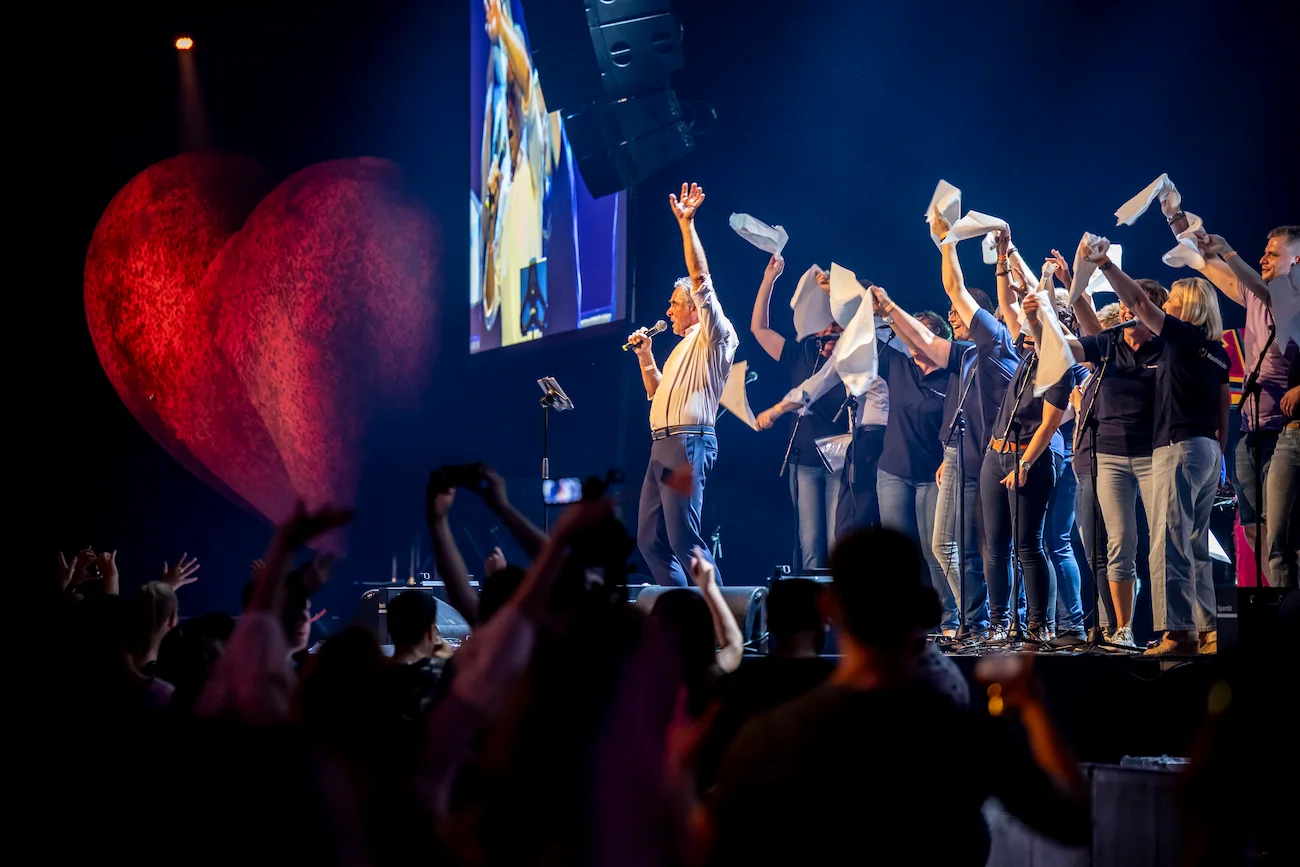
Culture change starts at a moment when people experience something together, say something out loud together, or break together with the way things have always been. A live event can create that moment — and you can organise it.

That's what makes a culture change event different from a kick-off or a staff party. At a kick-off a new project takes centre stage. At a culture change event a new pattern of behaviour takes centre stage. That's a fundamentally different goal — and it calls for a fundamentally different approach.

Culture change through an event only works if the event isn't a stand-alone element on its own. A lovely day that then gets lost in the daily grind is not a tool for change. The event is a catalyst. It loosens something, sets something in motion, or marks a clear break. What comes after is at least as important.

We work with organisations in the middle of a change process. Mergers, new strategies, culture clashes after a takeover, or simply the will to work differently. In each of those processes there's a moment when a live event can make the difference. This article is about how you do that.

When is an event the right tool?

Not every culture change calls for an event. But there are three moments when a live gathering can play a unique role.

The moment of marking — You want to draw a clear line between 'before' and 'now'. A reorganisation, a new strategy, a merger. An event can set that "break" in motion. It says: this is the moment when we leave something behind and begin something new.

The moment of connection — Culture change fails when people are left to do it alone. An event brings together people who normally never cross paths. It breaks through silos. It puts faces to names. It makes the change shared rather than lonely.

The moment of activation — People who have done something together are more engaged than people who have heard something. An event where participants work on the change themselves — in conversation, in formats, in practice — is different from an event where a director tells them what is going to change.

Do you know which moment you need? That's the first question we ask. Because the answer determines the format of the event.

The programme: from words to behaviour

A culture change event programme works differently from an ordinary conference or staff party. The content serves behavioural change — not inspiration or entertainment.

Principles that work:

  • Small groups, real conversations — Culture change doesn't happen in plenary sessions. It happens when people are honest with one another about what isn't right, what they're missing, what they want. Facilitate small group conversations with the right questions.
  • People's own stories at the centre — Employees who explain why the culture change is relevant to them are more convincing than any outside speaker. Build in moments where people can share their own story.
  • Make concrete agreements — An event without concrete action points is a day of talking. Close every session with: what are you going to do differently tomorrow? Have people write that down, say it out loud, exchange it.
  • Symbolic rituals — A shared act — handing something in, writing something, doing something physical — makes the change tangible. Rituals lodge things in the memory in a way that words don't.

Always combine this with time for informal contact. Culture change is also a matter of trust. You build that trust in the break, over lunch, in the corridor.

The role of leadership on the day itself

Culture change starts at the top. That cliché is true — and it means that the way leaders behave at the event says more than any part of the programme.

A director who gives a keynote about vulnerability but then doesn't go out into the room communicates exactly the opposite. A management team that sits neatly in a row on stage and walks off after the plenary session shows that this event is something different for them than for the rest.

Brief leaders on behaviour, not on text. Not 'say this in your speech' but 'sit down at the table with the department where there's the most resistance'. Not 'show that you're involved' but 'name three people and ask them what they expect from the change'.

The best culture change events are the ones where a director says something nobody expected — honest, vulnerable, or surprisingly specific. That moment breaks through the formal layer. And that breakthrough is the starting point of real change.

We advise leaders on how to take on that role. Not as media training, but as a conversation about what you want to leave behind with your people.

Follow-up: the event is the beginning, not the end

The most dangerous thing you can do after a culture change event is nothing. People go home with energy and good intentions. And a week later the old patterns are back.

That's not a failure of the event — that's the reality of behavioural change. Habits don't change through a single moment. They change through repetition, feedback and structural adjustments in the environment.

Follow-up measures that work:

  • Send participants a summary within 48 hours with the concrete agreements made on the day.
  • Schedule a short follow-up moment after six weeks: have the agreements been kept? What worked?
  • Link the event to a visible change in the working environment — a new ritual, an adjusted meeting structure, a different layout of the space.
  • Name ambassadors who make the new culture visible in their daily behaviour.

The event gives you six to eight weeks of momentum. Use that time well. After two months without a follow-up the energy is gone.

Why bring in an events agency?

Organising a culture change event takes more than a good venue and catering. It takes an understanding of people, facilitating formats and the courage to programme difficult conversations rather than avoid them.

We're not a training agency or a consultancy. We're an events agency. But we know how to design a day that isn't just fun, but really does something too.

We think along about the programme. We advise on the role of leadership. We know the venues that create the right atmosphere for difficult conversations. And we arrange everything — so you can focus on what is really going on.

We work with HR directors, change managers and leadership teams who know that a good idea doesn't automatically become a good event. From the first concept to the follow-up three months later.

Start here

Organising a culture change event starts with a conversation about what is really going on. Not about the theme, the venue or the budget — but about what you want people to feel, think and do after they've gone home.

We listen carefully. We ask the hard questions. And from there we devise and organise a day that really does something.

Send us a message via the contact form on our website, or fill in the brief. Then we'll know exactly where we stand.

Seriously fun.

Frequently asked questions

What does a culture change event cost on average?

The costs vary widely with the scale and complexity. For an event with 50–100 participants, reckon on a budget of €15,000 to €40,000, including venue, programme and facilitation.

For larger organisations with 200+ people you quickly rise to €60,000 or more. The investment pays off if the event sets behavioural change in motion.

Want to know more about a culture change event? Read our full article →

Which formats work at a cultural change event?

For cultural change, formats that actively involve staff work best. Think of an open-space gathering where participants set the agenda themselves. Or a world café with rotating discussion groups. Story-sessions also work strongly: colleagues share their own stories there.

We advise against a closed setup with only a keynote speaker; that breeds passivity. We always combine large plenary moments with smaller formats that make space for real conversation.

What are the pitfalls of an event about culture change?

Six pitfalls keep recurring. The event feels obligatory and forced; engagement stays low. The board doesn't make its involvement visible. Underlying problems remain unspoken, which makes the event feel superficial. There is no follow-up, so the momentum disappears immediately. Sceptical voices get no platform. And the change history is missing, so context falls away.

Culture change through an event only works as part of a broader, continuous programme. Live Impact helps with both the content and the mental preparation.

Want to know more? Read our full article →

Can Live Impact organise an event for culture change?

Yes. We design and facilitate events that set culture change in motion. We start with a diagnosis of the organisational situation, coach speakers in advance, select the right format and provide live facilitation.

Attendees leave with a shared sense of direction and concrete coherence for the next steps. A culture change event isn't a day full of presentations: it's a carefully designed experience.

Get in touch for an exploratory conversation.

Want to know more? Read our full article →

How do you use an event as a tool for cultural change?

Events create a safe space for new ways of thinking. Through stories, experience modules and conversations between colleagues, you introduce different ways of working. Important keys: make leadership involvement visible. Give employees the stage, don't leave it only to experts. Interactive formats such as group discussions and co-creation feel less like one-way traffic. Link the event to operational follow-up; a one-off event evaporates. Live Impact advises on the change approach and the role of the event within it.

Want to know more? Read our full article →

Inspired
Moved?

Thank you!
Oops! Something went wrong while submitting the form.