Why most project kick-offs stay a formality

A project kick-off often feels like a long meeting. The project lead works through the run sheet. Everyone nods and it is agreed who does what. Then everyone goes their own way. Two months later, half of those agreements turn out to have been understood differently.

That is because a project kick-off is often built from the structure: planning, tasks, deadlines. But not from the team: who are we, how are we going to work, what do we need from each other. The result is that the structure is clear, but the collaboration stays shaky.

A good project kick-off delivers three things at once: clarity on the content, trust between the people and a shared picture of success. Without those three, you are sitting in a crisis meeting six weeks from now.

What needs to happen before the kick-off?

Preparation is decisive. The project lead who walks into the first meeting on Monday morning unprepared sets the tone for the whole project: improvising is fine.

Prepare three things. The first is a brief of no more than two A4 pages that every participant reads in advance. The second is an agenda for the kick-off with blocks on content, collaboration and commitment. The third is a list of the most important choices that need to be made on the day, not deferred.

Send the brief 48 hours in advance, not a week. Earlier and it is forgotten. Later and it is not preparation. In the invitation, ask for one question or concern per person. Those questions are the real agenda of the day.

The content of the kick-off

A project kick-off has four blocks. The first block is the why. Why are we doing this, what is the goal, what changes if we succeed. No more than twenty minutes, sharp and without corporate jargon.

The second block is the content. What is the scope of the project, what is in it, what is explicitly not in it. This is the block where misunderstandings later come from, so make it painfully concrete.

The third block is the approach. How are we going to work, who does what, how often do we meet. Which tools do we use and how do we make decisions. Make this as specific as possible.

The fourth block is the risks. What could go wrong, what can we already see coming, what needs extra attention. A project without this block is a project with blind spots.

Venue and setting

A project kick-off in the same meeting room as every other meeting unconsciously steers people towards ‘just another meeting’. People do not switch into project mode. They nod, think about their email and move to the next appointment.

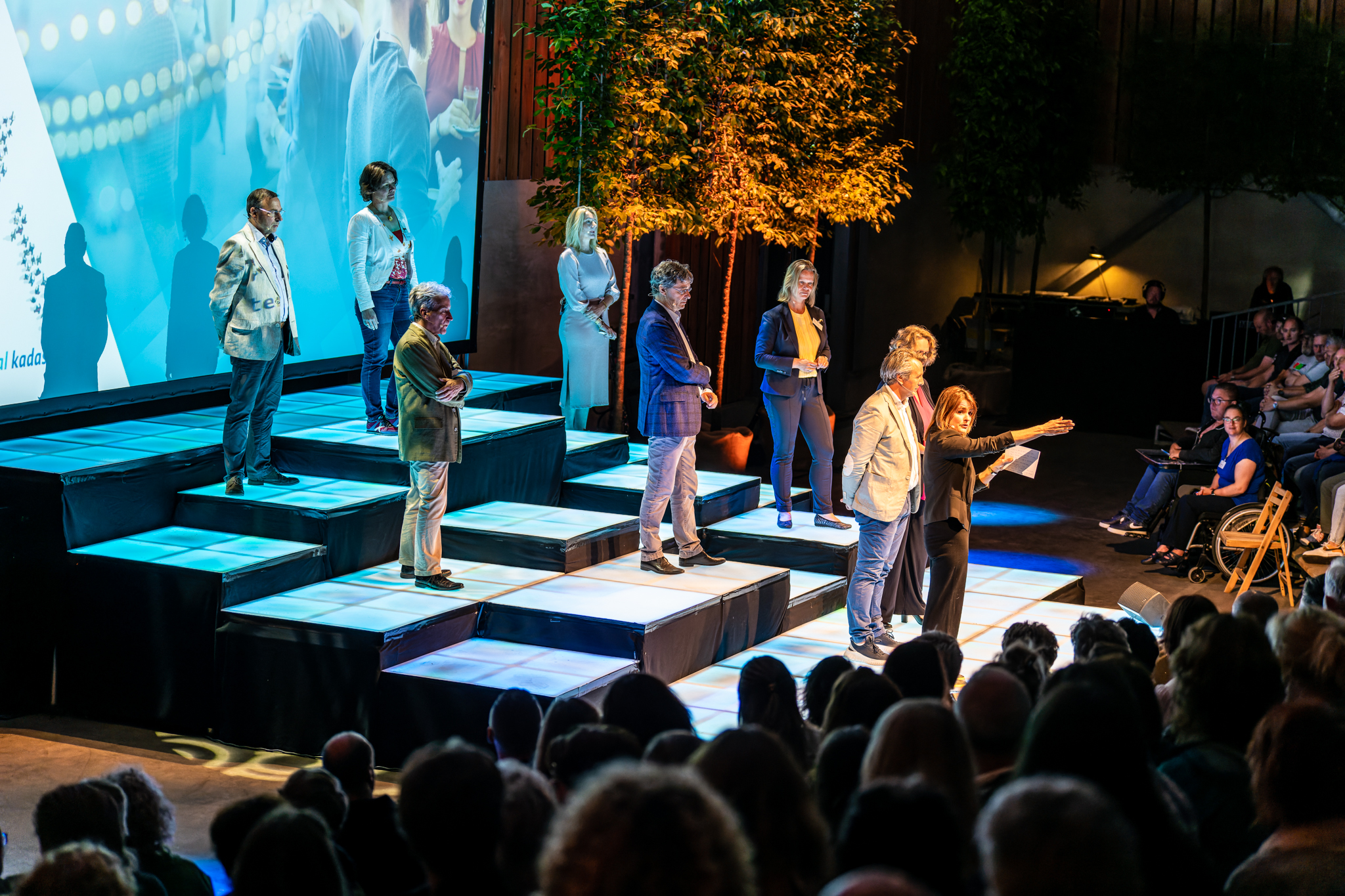
For a project of any size, it always helps to hold the kick-off somewhere else. An off-site meeting venue. A day in a museum or by the coast. A half-day at a neutral spot where nobody is checking email.

The distance from the normal work is a statement: this project is different, this deserves our full attention. It does not need to be expensive, but it does need to be a deliberate choice.

Commitment and follow-up

A project kick-off without clear agreements is a good conversation. A project kick-off with recorded commitments is a starting point. The difference lies in what gets physically captured on the day itself.

End the kick-off with three visible outcomes: an action list on the wall that everyone has seen, a calendar with the most important milestones on the table that day, and a conversation about which risks the team as a whole will keep watch on.

Schedule the first and second follow-up moments in the same session. Do not do that vaguely (‘we’ll meet up when needed’) but concretely (Thursday in two weeks at 2 pm). Anyone who walks out without those two dates in the diary has not yet committed to the project.

Why an external facilitator helps

For most project kick-offs inside your own team, you can do this yourself. But when the project is complex, an external facilitator helps. For instance when several departments or parties are involved, or when interests pull in different directions.

An outsider asks questions you no longer dare to ask. They hear things that stay unsaid inside your organisation. They make differences visible that would otherwise only blow up in week six.

At larger project kick-offs it also helps not to put the production and the programme on the project lead. Think of fifty or more people and several stakeholders with high stakes. They have better things to do at the kick-off than check whether the tech is working. We think with you on the content and make sure the kick-off pays off.

How to give your project a strong start

For a large project kick-off with multiple parties: get in touch. We think with you on the content approach and arrange the delivery, so you can be sharp where you need to be sharp.

Call us on 085 401 40 14 or email hello@live-impact.nl. We will make sure your project gets off to a good start.

Seriously fun.

Frequently asked questions

Kan Live Impact een grote project kick-off begeleiden?

Ja. Voor grote of complexe projecten met meerdere teams of partners begeleiden wij de kick-off van A tot Z. Dat omvat programma, locatie, facilitatie, energie en vervolgmomenten. Wij zijn een bureau dat concepten bedenkt en uitvoert, dus de inhoud en de uitvoering komen uit één hand. Plan een kennismaking en wij denken mee.

Meer weten? Lees het volledige artikel of neem direct contact op.

Wat hoort er in een goede project kick-off briefing?

Een goede briefing bevat: doel en scope, planning met mijlpalen, rolverdeling, budget, risico's en afhankelijkheden. Stuur hem 48 uur vooraf rond, zodat iedereen voorbereid binnenkomt. Tijdens de kick-off bespreek je de briefing niet woord voor woord. Je gebruikt hem als anker voor de gesprekken die ertoe doen.

Meer voorbereidingstips? Lees het volledige artikel.

Wie moet er bij een project kick-off aanwezig zijn?

Iedereen die de komende periode aan het project werkt. Dus de projectleider en stuurgroep, plus de mensen die het echte werk doen. Een opdrachtgever of sponsor erbij is sterk: die kan het waarom toelichten en commitment uitspreken. Externe partners (leveranciers, freelancers) horen er ook bij als ze een rol spelen.

Meer over rolverdeling? Lees het volledige artikel.

Hoe lang moet een project kick-off duren?

Voor een klein project van een paar weken volstaat twee uur. Voor een complex project van zes maanden of meer reken je een halve tot hele dag. De vuistregel: lang genoeg om alle vier de inhoudsblokken goed door te nemen, kort genoeg om scherp te blijven. De blokken zijn waarom, wat, hoe en risico's. Bouw pauzes in en sluit af met een sociaal moment.

Meer weten over de opbouw? Lees het volledige artikel.

Waarom kiezen klanten voor Live Impact?

Omdat wij het concept en de uitvoering uit één hand leveren. Omdat wij eerlijk zijn over budget, planning en wat wel en niet kan. Omdat wij scherp blijven tot het laatste detail. En omdat wij een database van honderden acts en locaties hebben die wij keer op keer met goed gevolg inzetten. Serieus Leuk werken, noemen wij dat.

Meer weten? Plan een kennismaking.

Inspired
Moved?

Thank you!
Oops! Something went wrong while submitting the form.