Why a Christmas party is something fundamentally different from a year-end party

Plenty of companies use 'company Christmas party' and 'year-end party' interchangeably on the invitation. For the planning it may not matter. Both fall in December, both are a moment to bring the team together. But the tone, the energy and the intention differ enormously.

A year-end party looks back. At the results, the targets, the achievements, the challenges. It often has a business dimension. A speech from leadership, a glance at the new year, a thank-you for everyone's effort. You head home with a sense of closure.

A company Christmas party is different. It doesn't look back, it doesn't look forward. It stands still. It's the moment when you don't have to do anything. No targets, no speeches, no annual review. Just warmth, good food, music that suits the time of year, and the feeling that you belong somewhere.

That nuance is subtle but significant. A Christmas party set up as a year-end party misses the point. A keynote, a plenary moment or a presentation about 2027 has no place there. People come home and say: 'Nicely done. But where was Christmas?'

The sensory building blocks of Christmas atmosphere

You don't create a Christmas atmosphere with a Christmas tree and some tinsel. A Christmas atmosphere is a sensory experience: it's what you hear, smell, feel and taste. Start with those four rather than with the logistics.

Sound. Think of crackling fire, soft Christmas music in the background (no Wham! at full volume, but instrumental covers of the classics), the voice of a live performance and an atmosphere where you can talk without shouting.

Scent. Think of mulled wine, cinnamon, pine branches and hot chocolate. These scents instantly conjure 'Christmas', because they're interwoven with personal memories of childhood. Choose a venue where you can lean into these scents (an open fire, a chocolate bar, a warm drinks station at the entrance).

Temperature and light. Christmas feels warm. Choose a place with an open fire or wood stove, dimmed light — preferably real candles (or at the very least warm LED) — without harsh fluorescent or artificial light of the kind you might find around a flatscreen.

Taste. Skip the cold buffet and choose warm dishes you share: stews, game dishes, hearty recipes with the herbs you use in winter, and desserts people tuck into like a child, such as warm apple pie with whipped cream, chocolate or marzipan.

If these four are right, you hardly need to do anything to the rest of the décor. The atmosphere does the work.

The big-or-small-scale question: which feels like a Christmas party?

A Christmas party always feels better on a smaller scale than on a large one. That is one of the most important insights from the dozens of Christmas parties we've produced at Live Impact.

A Christmas party for fifty people in a warm small room feels warmer than a Christmas party for 500 in a vast hall. Even if the décor in that hall is twenty times more expensive, the smaller version still feels more Christmassy. That's because Christmas is about closeness. You want to be able to touch someone as you pass the mulled wine. You want to hear them laugh across the dinner table. And you want musicians to stand close enough for eye contact.

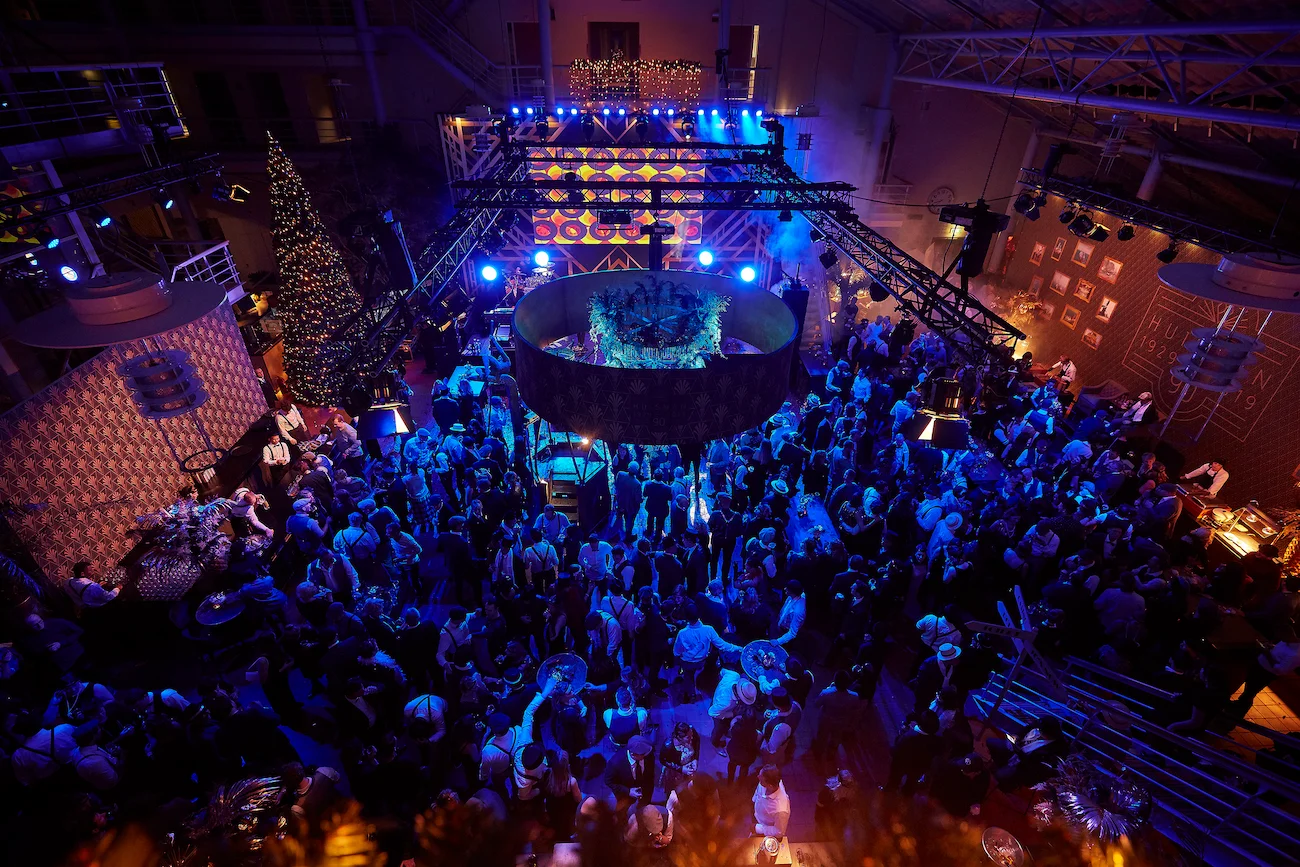
Does that mean a large team can't celebrate? No. But then you have to break scale into zones. Several smaller rooms within one venue, each with its own atmosphere. A large room divided into seating areas around different fires or open hearths. A Christmas-market set-up where people walk between stalls instead of all sitting in one hall.

What you avoid: a plenary layout where everyone faces the same way, with one presenter on a raised platform. That's a conference, not a Christmas party.

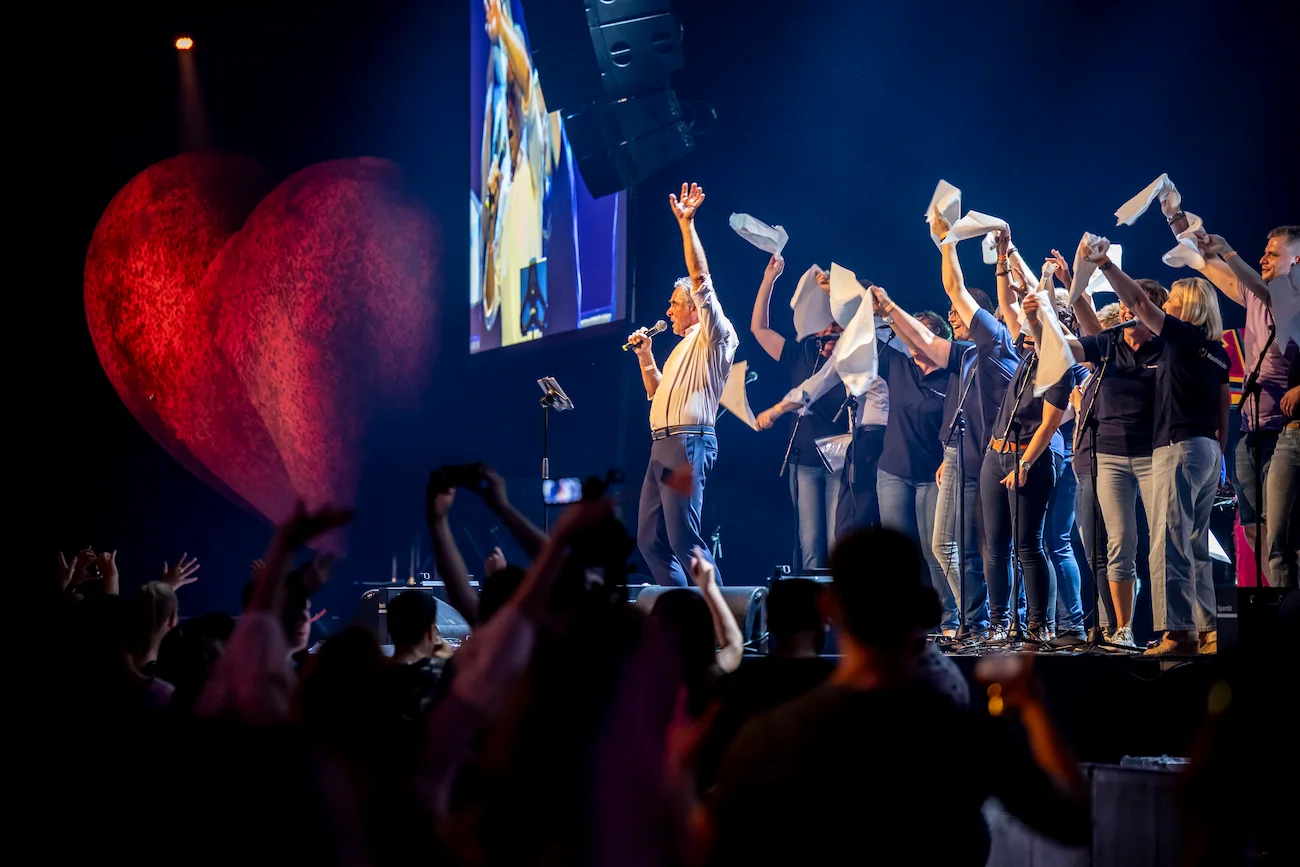
What does work in a large set-up is a shared singing moment. A room of 400 people singing 'Silent Night' together, accompanied by a string quartet: that is large and intimate at once. Those are the moments people talk about afterwards.

Venue choice that lifts the atmosphere

Not every venue suits a Christmas party. A sleek modern event hall can be beautiful for a product launch. For a Christmas party it feels cold. What we choose for Christmas parties:

Historic buildings. Castles, country estates, listed farmhouses. Thick walls, open fires, wooden beams. The venue already exudes a Christmas atmosphere without you having to do anything to it.

Traditional pubs and historic eating houses. For smaller groups (20 to 50 people), an authentic traditional pub, café restaurant or old farmhouse restaurant can be perfect. Close together, an open fire, a menu that suits the season.

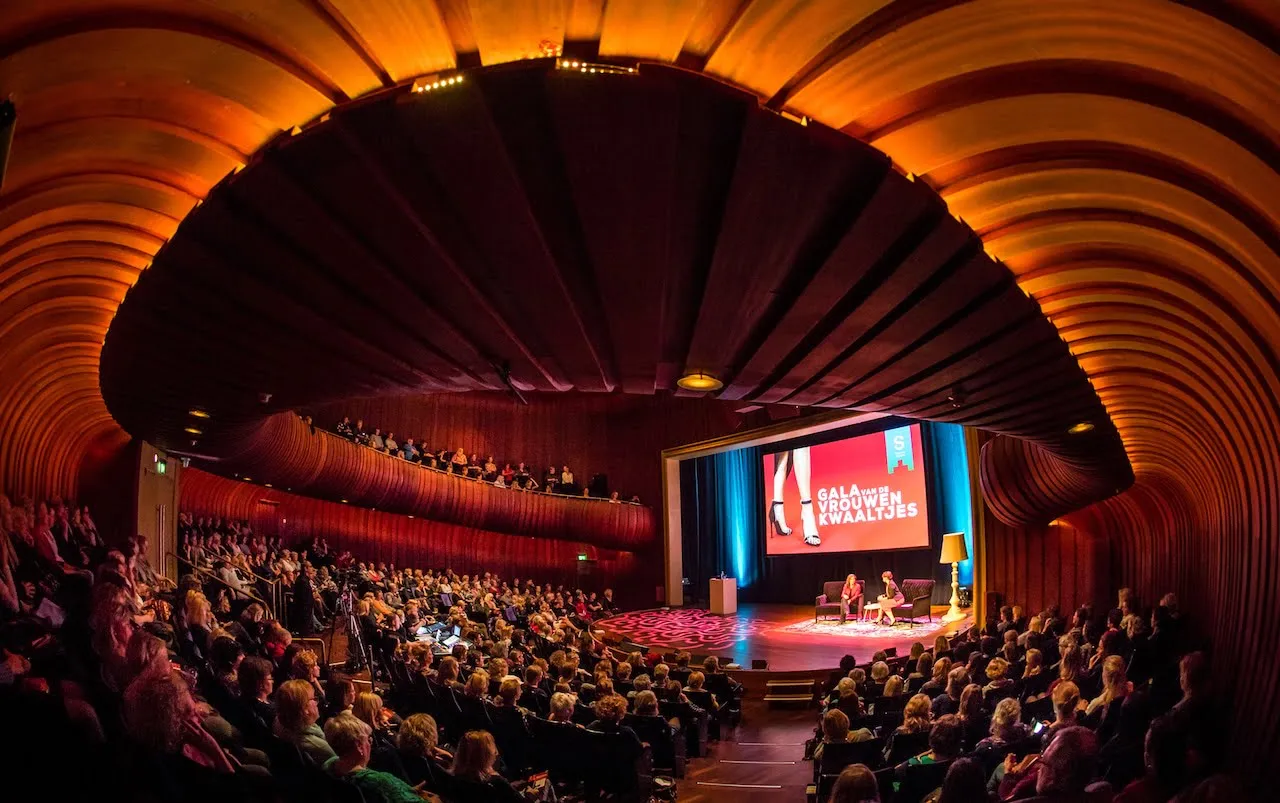
Theatres and old cinemas. Thanks to their warm interior (velvet, wood, muted lighting), they fit beautifully with a Christmas party with a theatrical edge. Think of a Christmas concert experience.

Christmas markets and winter estates. A Christmas party set up as a 'Christmas-market experience' on a country estate or historic square works powerfully. Guests walk between stalls with warm drinks, pastries and live music. For groups of 80+ a wonderful format.

What we avoid: large hotel ballrooms with stock decor, office-style event venues, conservatory spaces without a warm feel. They demand so much extra dressing that you spend the budget on that instead of on the programme.

A programme that suits the understated tone

A Christmas-party programme isn't a 6 pm to midnight slot with fixed segments. It's a flowing programme with pauses. Here's how we usually build it up:

Reception (5.30 pm to 6.30 pm). There's no fixed spot; guests move around freely. Mulled wine or a Christmas cocktail sits at the entrance, with soft background music and a pianist or harpist setting the tone. People drift in without a hard start signal.

Dinner or walking dinner (6.30 pm to 8.30 pm). We often choose a walking dinner over a seated dinner. It gives people more freedom to move and avoids the fixed seating plan that inevitably leads to 'who sits next to whom'. Three to five rounds of food, alternated with short musical moments or a fire being lit.

Highlight (8.30 pm to 9.30 pm). This is the most charged moment of the evening. It can be a live act that briefly holds the whole group still (a cellist, a choir, a singer), a warm speech from leadership (no more than five minutes, no slides), or a shared ritual (speaking a Christmas wish, raising a toast with something symbolic).

Wind-down (9.30 pm onwards). After the highlight the party drifts on softly. Those who want to stay, stay. Those who want to leave, go. A late DJ set or piano can keep the atmosphere going, but no one has to stay for a late after-party.

What we avoid: rigid time schedules, compulsory speeches, pub quizzes and dance floors with light shows. Those belong to other moments of the year.

What does a Christmas party actually cost?

A year-end party or Christmas party costs roughly €250 to €350+ per person ex. VAT for 250 to 500 guests. For 500 to 1,000 guests, expect roughly €225 to €325+ per person. For 1,000 to 2,000 guests, roughly €200 to €300+ per person. Above 2,000 guests, roughly €150 to €200+ per person. All amounts exclude VAT.

In December, many venues and suppliers add a peak-season surcharge. Book early: the best venues are fully booked by June.

Ready to create a Christmas party people actually look forward to?

A good Christmas party feels like a warm welcome after a long year. Not the 37th business moment of December, but the one moment where calm and warmth take the lead.

At Live Impact, we think afresh about every Christmas party — what fits your people. Small or large, formal or informal, traditional or unconventional. We always start with the question: how do we make sure your people go home with a warm feeling?

Plan an introduction. Not a sales call, but an exploratory conversation about what this Christmas party could be. Call 085 401 40 14 or email hello@live-impact.nl.

Seriously fun.

Frequently asked questions

Can Live Impact organise Christmas drinks?

Yes. We organise Christmas drinks for 30 to 500 people. From venue booking and supplier contracts to styling and music: concept and delivery in one hand. That way, on the evening itself, you're with your team and not behind the bar.

Read more about organising Christmas drinks →

Does a Christmas drinks event fall under the WKR?

Yes. A Christmas drinks event falls under the work-related costs scheme (WKR). In 2026 the free allowance is 1.7% of the total payroll. A Christmas drinks event for staff falls under it, as do other staff events. Note: if you've already held events earlier in the year, the free allowance may already be used up.

More about the Christmas drinks event →

What does organising a Christmas drinks event cost?

A year-end party or Christmas party costs roughly €250 to €350+ per person ex. VAT for 250 to 500 guests. For 500 to 1,000 guests you should count on roughly €225 to €325+ per person. For 1,000 to 2,000 guests around €200 to €300+ per person. Above 2,000 guests around €150 to €200+ per person. All amounts excluding VAT.

In December many venues and suppliers charge a peak-period surcharge. Book early: the best venues are already full in June.

More about organising a Christmas drinks event →

What is the difference between Christmas drinks and a Christmas party?

Christmas drinks are informal, standing, short (2 to 3 hours) and accessible. A Christmas party is an evening with dinner or buffet, programme or entertainment, a clear beginning and end.

For a Christmas party, expect around €250 to €350+ per person ex. VAT for 250 to 500 guests. For 500 to 1,000 guests around €225 to €325+ per person. For 1,000 to 2,000 guests around €200 to €300+ per person. Above 2,000 guests around €150 to €200+ per person. All amounts excluding VAT.

The mistake: planning drinks but expecting the experience of a party.

Read our full article on Christmas drinks →

Why do clients choose Live Impact?

Because we deliver the concept and the delivery from a single source. Because we are honest about budget, planning and what is and isn't possible. Because we stay sharp down to the last detail. And because we have a database of hundreds of acts and venues that we deploy successfully time and again. Seriously fun working, we call that.

Want to know more? Plan an introductory meeting.

Inspired
Moved?

Thank you!
Oops! Something went wrong while submitting the form.