Why culture change needs a live moment

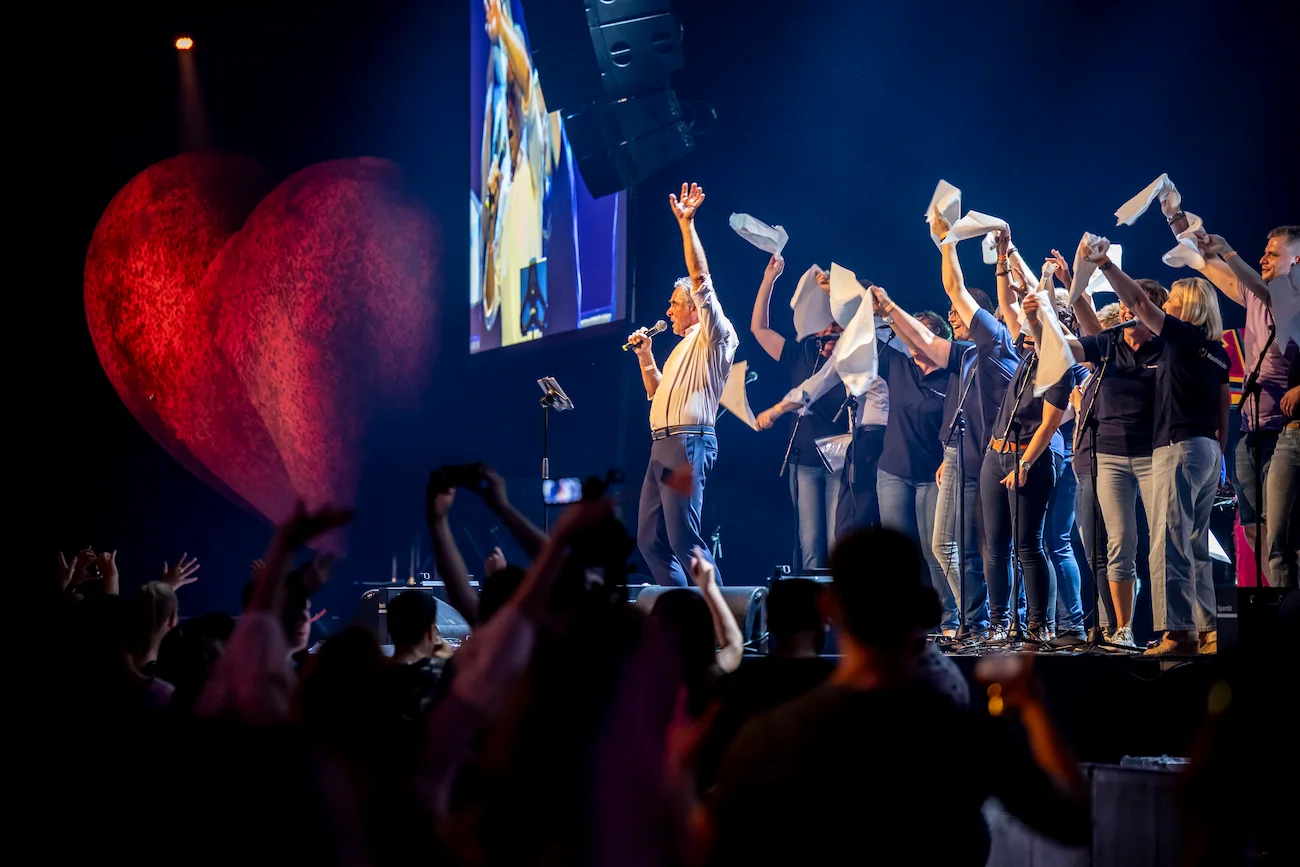
Culture change doesn't start in a PowerPoint. It starts at a moment when people experience something together, say something out loud together, or break with the way things have always been. And you can organise that moment.

That's what makes a culture change event different from a kick-off or a staff party. At a kick-off a new project takes centre stage. At a culture change event a new pattern of behaviour takes centre stage. That's a fundamentally different goal, and it calls for a fundamentally different approach.

Culture change through an event only works if the event isn't an island. A lovely day that then gets lost in the daily grind is not a tool for change. The event is a catalyst. It loosens something, sets something in motion or marks a clear break. What comes after is at least as important.

We work with organisations in the middle of a change process. Mergers, new strategies, culture clashes after a takeover, or the wish to work differently. In each of those processes there's a moment when a live event can make the difference. This article is about how you do that.

When is an event the right tool?

Not every culture change calls for an event. But there are moments when a live gathering can play a unique role.

A moment of marking. You want to draw a clear line between ‘before’ and ‘now’. A reorganisation, a new strategy, a merger. An event can ritualise that break. It says: this is the moment when we leave something behind and begin something new.

A moment of connection. Culture change fails when people are left to do it alone. An event brings together people who normally never cross paths. It breaks through departmental boundaries. It puts faces to names. It makes the change shared rather than lonely.

A moment of activation. People who have done something together are more engaged than people who have heard something. Those who take an active part in the change are more committed than those who simply listen to what is going to change.

Do you know which moment you need? That's the first question we ask. Because the answer completely determines how the event is set up.

The programme: from words to behaviour

The programme of a culture change event works differently from that of an ordinary conference or staff party. The content serves behavioural change, not inspiration or entertainment.

Principles that work:

Small groups, real conversations. Culture change doesn't happen in plenary sessions. It happens when people are honest with one another about what isn't right, what they're missing and what they want. Facilitate small group conversations with the right questions.

People's own stories at the centre. Employees who explain why the culture change is relevant to them are more convincing than any outside speaker. Build in moments where people can share their own story.

Make concrete agreements. An event without concrete action points is a day of talking. Close every session with: what are you going to do differently tomorrow? Have people write that down, say it out loud and exchange it.

Symbolic rituals. A shared act, such as handing something in, writing something or doing something physical, makes the change tangible. Rituals lodge things in the memory in a way that words don't.

Always combine this with time for informal contact. Culture change is also a matter of trust. You build that trust in the break, over lunch and in the corridor.

The role of leadership on the day itself

Culture change starts at the top. That cliché is true. The way leaders behave at the event says more than any part of the programme.

A director who gives a keynote about vulnerability but then doesn't go out into the room communicates exactly the opposite. A management team that sits neatly in a row and walks off after the plenary session shows that this event counts differently.

Brief leaders on behaviour, not on text. Not ‘say this in your speech’, but ‘sit down at the table with the department where there's the most resistance’. Not ‘show that you're involved’, but ‘name three people and ask what they expect’.

The best culture change events are the ones where a director says something nobody expected: honest, vulnerable or surprisingly specific. That moment breaks through the formal layer. And that breakthrough is the starting point of real change.

We advise leaders on how to take on that role. Not as media training, but as a conversation about what you want to leave behind with your people.

Follow-up: the event is the beginning, not the end

The most dangerous thing you can do after a culture change event is nothing. People go home with energy and good intentions. And a week later the old patterns are back.

That's not a failure of the event, that's the reality of behavioural change. Habits don't change through a single moment. They change through repetition, feedback and structural adjustments in the environment.

Follow-up measures that work: send participants a summary within 48 hours with the concrete agreements made on the day. Schedule a short follow-up moment after six weeks: have the agreements been kept? What worked? Link the event to a visible change in the working environment: a new ritual, an adjusted meeting structure or a different layout of the space. Name ambassadors who make the new culture visible in their daily behaviour.

The event gives you six to eight weeks of momentum. Use that time well. After two months without a follow-up the energy is gone.

Why bring in an events agency?

Organising a culture change event takes more than a good venue and catering. It takes an understanding of change psychology, facilitating formats and the courage to programme difficult conversations rather than avoid them.

We're not a training agency or a consultancy. We're an events agency. But we know how to design a day that is fun and that does something.

We think along about the programme and advise on the role of leadership. And we know the venues that create the right atmosphere for difficult conversations. And we arrange everything, so you can focus on what is really going on.

We work with HR directors, change managers and leadership teams who know that a good idea doesn't automatically become a good event. From the first concept to the follow-up three months later.

Start here

Organising a culture change event starts with a conversation about what is really going on. Not about the theme, the venue or the budget. But about what you want people to feel and do after they've gone home.

We listen carefully, ask the hard questions and build a day from there that really does something.

Call us on 085 401 40 14 or send an email to hello@live-impact.nl.

Seriously fun.

Frequently asked questions

Hoe gebruik je een evenement als instrument voor cultuurverandering?

Evenementen creëren een veilige ruimte voor nieuwe denkwijzen. Via verhalen, ervaringsmodules en gesprekken tussen collega's introduceer je andere werkwijzen. Belangrijke sleutels: maak de betrokkenheid van de directie zichtbaar. Geef medewerkers het podium, en laat niet alleen experts aan het woord. Interactieve formats zoals groepsdiscussies en co-creatie voelen minder als eenrichtingsverkeer. Koppel het evenement aan operationele opvolging; een eenmalig evenement verdampt. Live Impact adviseert over de veranderaanpak en de rol van het evenement daarin.

Meer weten? Lees ons complete artikel →

Welke formats werken bij een cultuurveranderingsevenement?

Bij een cultuurverandering werken formats die medewerkers actief betrekken het beste. Denk aan een open-space bijeenkomst waar deelnemers zelf de agenda bepalen. Of een world-café met wisselende gespreksgroepen. Ook verhalensessies werken sterk: collega's delen daar hun eigen verhalen.

Wij raden een gesloten opzet met alleen een hoofdspreker af; dat wekt passiviteit. Wij combineren grote plenaire momenten altijd met kleinere werkvormen die ruimte geven voor echt gesprek.

Hoe zorg je voor follow-up na een cultuurveranderingsevenement?

Een evenement is een startmoment, geen eindpunt. Verstuur binnen een week een samenvattingsbrief met leerpunten en vervolgstappen. Richt werkgroepen of commissies op voor opkomende thema's. Plan 30 tot 60 dagen later een consolidatiemoment (een kleinere bijeenkomst). Communiceer de voortgang en resultaten. Integreer het veranderthema in reguliere teamvergaderingen. Documenteer ervaringen. Live Impact helpt met vervolgstappenplannen.

Meer weten? Lees ons complete artikel →

Wat zijn de valkuilen bij een evenement over cultuurverandering?

Zes valkuilen komen steeds terug. Het evenement voelt verplicht en geforceerd; de betrokkenheid blijft laag. De directie maakt haar betrokkenheid niet zichtbaar. Onderliggende problemen blijven onbesproken, waardoor het evenement oppervlakkig aanvoelt. Er is geen opvolging, waardoor het momentum direct verdwijnt. Sceptische stemmen krijgen geen podium. En de verandergeschiedenis ontbreekt, waardoor context wegvalt.

Cultuurverandering via een evenement werkt alleen als onderdeel van een breder, doorlopend programma. Live Impact helpt zowel bij de inhoud als de mentale voorbereiding.

Meer weten? Lees ons complete artikel →

Kan Live Impact een evenement voor cultuurverandering organiseren?

Ja, wij ontwerpen en faciliteren cultuurveranderingsevenementen: diagnose, sprekersvoorbereiding, formatkeuze, begeleiding ter plaatse en vervolgplanning. Je organisatie vertrekt met een gedeelde richting en een concreet vervolgplan.

Meer weten? Lees ons complete artikel →

Inspired
Moved?

Thank you!
Oops! Something went wrong while submitting the form.